
Smoke Signal – Gigi Gryce
A real "smoker," this song's changes are an adaptation of the Rodgers/Hart standard Lover. Gigi Gryce recorded four different arrangements; the first one we’re making available is from Dizzy Gillespie’s octet recording.
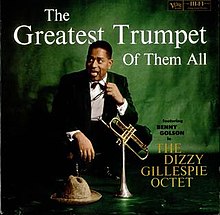

- Recording: Dizzy Gillespie - The Greatest Trumpet Of Them All
- Recorded on: December 17, 1957
- Label: Verve (MGV 8352)
- Concert Key: E-flat
- Vocal Range: , to
- Style: Swing (uptempo)
- Trumpet - Dizzy Gillespie
- Trombone - Henry Coker
- Alto Sax - Gigi Gryce
- Tenor Sax - Benny Golson
- Baritone Sax - Pee Wee Moore
- Piano - Ray Bryant
- Bass - Tommy Bryant
- Drums - Charli Persip
Video
- Description
- Historical Notes
- Solos
- Piano Corner
- Bass Corner
- Drum Corner
- Guitar Corner
- Inside & Beyond
- Minus You
This uptempo yet lyrical song sounds like a standard in its own right, but is in fact a well-disguised contrafact on the changes of Lover. The most distinctive feature of Lover's changes, the descending dominant chords in half-steps, is hidden with some clever tritone substitution. The tonic E♭ chord at the beginning becomes the dominant of a II-V7 to A♭ major, a tritone away from the original D7. The same pattern repeats a whole step lower, followed by the end of the descending sequence (B7-B♭7) as in Lover itself.
Gigi Gryce recorded four medium-large ensemble arrangements of Smoke Signal. This version from "The Greatest Trumpet Of Them All" is the last, and is quite different from the others. It features a striking intro in which the rhythm section vamps an over-the-barline 5/4 pattern. The horns add a pentatonic melody on top, with some counterpoint in the lower voices. The simple melody and repetitive rhythms reinforce the American Indian stereotype implied in the title, as in Clifford Brown's intro to the standard Cherokee.
The head goes to swing, with all horns harmonized on the melody. The last chord of letter C (the second A of the head form) is held out, and then the piano plays the bridge rubato, accompanied only by bowed bass. There is a two-measure ensemble "tag," back in tempo, at the end of the bridge to lead back to the last section of the head. The first soloist is trumpet, for two choruses with backgrounds on the second chorus. After this solo, eight measures of drum solo (toms only) set up an unusual ensemble interlude, with a “diminished” sound and alternating two measures of 4/4 with a measure of 6/4. Another four measures of drum solo lead into a tenor sax solo over standard Lover changes, with a background on the second A section. The last 16 measures of this chorus, however, is a piano solo with the same changes as the head. There is then a “shout chorus” (first two A sections), another drum solo on the bridge, and the last 16 measures similar to the in head, winding down with a half-note triplet ending.
Gigi Gryce recorded four medium-large ensemble arrangements of Smoke Signal. This version from "The Greatest Trumpet Of Them All" is the last, and is quite different from the others. It features a striking intro in which the rhythm section vamps an over-the-barline 5/4 pattern. The horns add a pentatonic melody on top, with some counterpoint in the lower voices. The simple melody and repetitive rhythms reinforce the American Indian stereotype implied in the title, as in Clifford Brown's intro to the standard Cherokee.
The head goes to swing, with all horns harmonized on the melody. The last chord of letter C (the second A of the head form) is held out, and then the piano plays the bridge rubato, accompanied only by bowed bass. There is a two-measure ensemble "tag," back in tempo, at the end of the bridge to lead back to the last section of the head. The first soloist is trumpet, for two choruses with backgrounds on the second chorus. After this solo, eight measures of drum solo (toms only) set up an unusual ensemble interlude, with a “diminished” sound and alternating two measures of 4/4 with a measure of 6/4. Another four measures of drum solo lead into a tenor sax solo over standard Lover changes, with a background on the second A section. The last 16 measures of this chorus, however, is a piano solo with the same changes as the head. There is then a “shout chorus” (first two A sections), another drum solo on the bridge, and the last 16 measures similar to the in head, winding down with a half-note triplet ending.
Despite its characteristically bold title, "The Greatest Trumpet Of Them All" is not merely a feature album for Dizzy Gillespie. All the songs on this album were composed or arranged by Gigi Gryce and Benny Golson. This recording session came between the two classic Dizzy albums with Sonny Rollins and Sonny Stitt as well as the same rhythm section from this session: "Duets" from December 11th, featuring the two Sonnys separately, and "Sonny Side Up” on the 19th with the full sextet.
This is the fourth recording of Smoke Signal. Gigi Gryce first recorded a nonet arrangement also featuring Art Farmer in October 1955, issued on “Nica’s Tempo” (check out In A Meditating Mood for another from this session). The next was on “Oscar Pettiford Orchestra In Hi-Fi” in June 1956, with solos by both Farmer and Lucky Thompson. In February 1957 Gigi recorded another nonet version, largely similar to the first, issued on the Columbia compilation “Jazz Omnibus.” Both nonet lineups were the same instrumentation as the classic Miles Davis “Birth Of The Cool” sessions.
This is the fourth recording of Smoke Signal. Gigi Gryce first recorded a nonet arrangement also featuring Art Farmer in October 1955, issued on “Nica’s Tempo” (check out In A Meditating Mood for another from this session). The next was on “Oscar Pettiford Orchestra In Hi-Fi” in June 1956, with solos by both Farmer and Lucky Thompson. In February 1957 Gigi recorded another nonet version, largely similar to the first, issued on the Columbia compilation “Jazz Omnibus.” Both nonet lineups were the same instrumentation as the classic Miles Davis “Birth Of The Cool” sessions.
Related Songs
Email Send Smoke Signal to a friend
Send this page to a friend via email. Add your name or email in the first field. In the second, add one or more email addresses, separated by a comma.
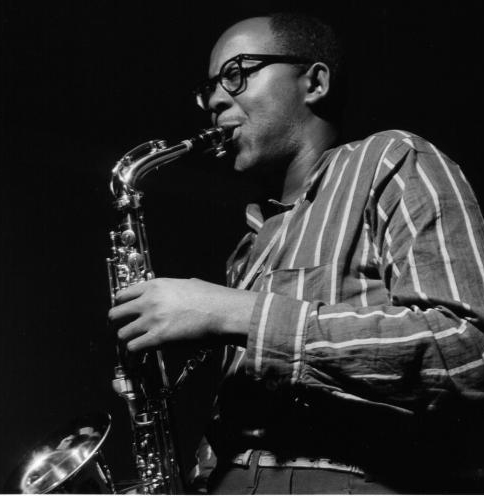
Gigi Gryce
November 28, 1925 – March 17, 1983
Gigi Gryce was a fine altoist in the 1950s, but it was his writing skills, both composing and arranging (including composing the standard Minority) that were considered most notable. After growing up in Hartford, CT, and studying at the Boston Conservatory and in Paris, Gryce worked in New York with Max Roach, Tadd Dameron, and Clifford Brown. He toured Europe in 1953 with Lionel Hampton and led several sessions in France on that trip. Read more...
There was a problem.
...