
I Didn't – Miles Davis
The head of this song is adapted from Miles Davis' improvisation on his own adaptation of the changes for Thelonious Monk's Well, You Needn't. Parts are available for the quintet arrangement as recorded by jazzleadsheets.com's Don Sickler.
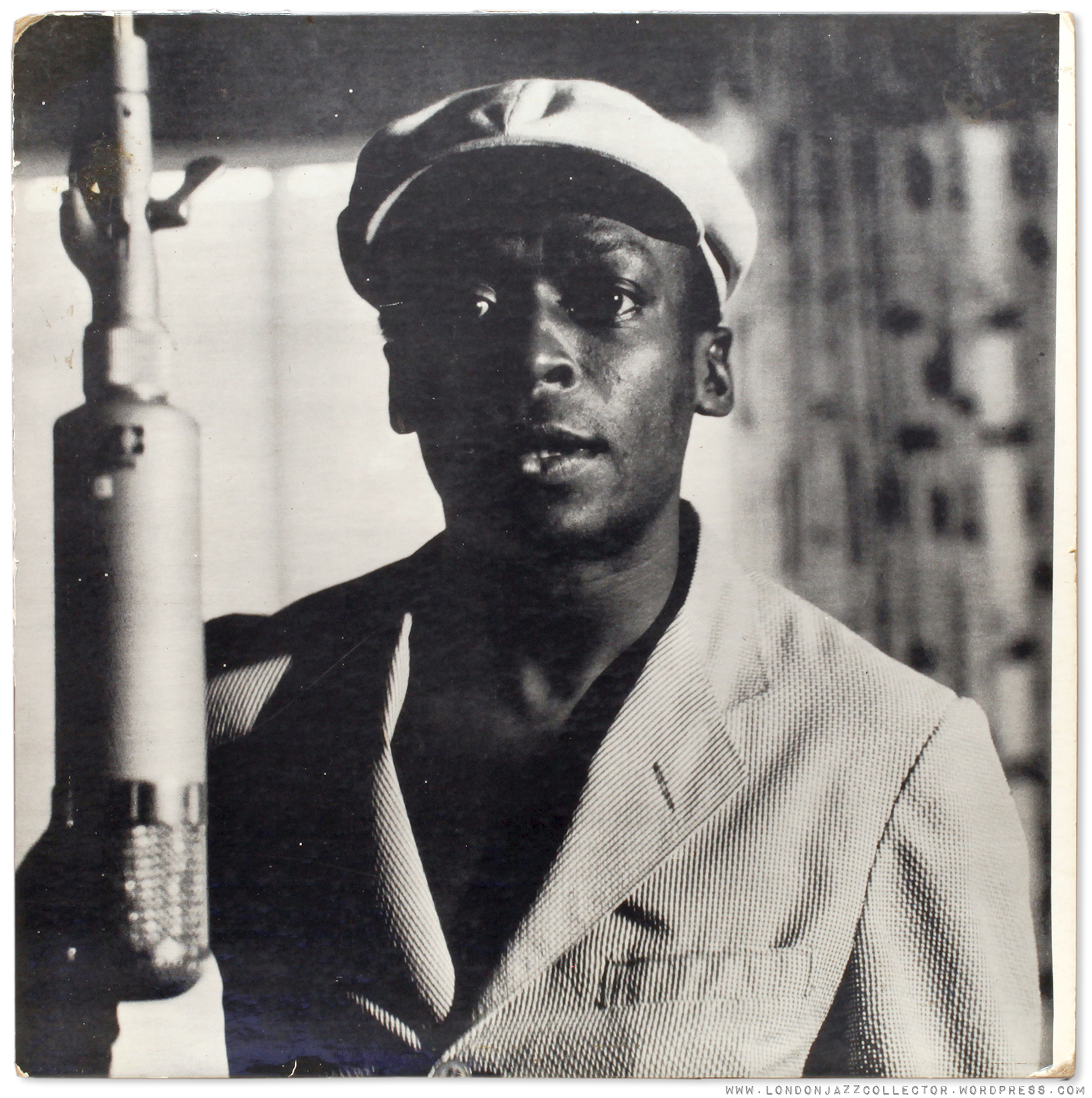
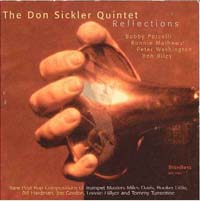

- Recording: Miles Davis - The Musings Of Miles
- Recorded on: June 7, 1955
- Label: Prestige (LP 7007)
- Concert Key: F
- Style: Swing (uptempo)
- Trumpet - Miles Davis
- Piano - Red Garland
- Bass - Oscar Pettiford
- Drums - Philly Joe Jones
Monk says Well, You Needn't so Miles answers I Didn't. I Didn't is Miles' improvisational contrafact on the changes of Monk's composition, as recorded by Miles Davis a year earlier—see below. Our lead sheets show Miles' first chorus, which is used as the melody on Don Sickler's recording (click the second album cover for that one). This chorus repeats simple figures with slight rhythmic variation in the A and C sections. These figures, like Thelonious Monk's original melody, are largely triadic; they ascend F major and descend G♭ major in a rather simpler way than the Monk motif. There is no "out head," but in the C section of Miles' last solo chorus he repeats a phrase very similar to the second A section of his opening chorus.
It should be noted that this recording does not use Monk's original changes. Instead, the same changes are played as in Miles' 1954 recording of Well, You Needn't. The bridge begins on G7, rising chromatically to B7 in the sixth measure and then falling back to F for the C section. I Didn't is thus both a contrafact (if the first chorus is used as a "head") and a reharmonization —two steps removed from Well, You Needn't.
The melody lead sheets shown under "The Musings Of Miles" record cover are the same ones shown under the "Reflections" cover, although the names are different.
It should be noted that this recording does not use Monk's original changes. Instead, the same changes are played as in Miles' 1954 recording of Well, You Needn't. The bridge begins on G7, rising chromatically to B7 in the sixth measure and then falling back to F for the C section. I Didn't is thus both a contrafact (if the first chorus is used as a "head") and a reharmonization —two steps removed from Well, You Needn't.
The melody lead sheets shown under "The Musings Of Miles" record cover are the same ones shown under the "Reflections" cover, although the names are different.
Miles Davis first recorded Well, You Needn't, with his own version of the original Monk head, on a quartet session for Blue Note on March 6th, 1954. This version, with Horace Silver, Percy Heath, and Art Blakey, is about half the tempo of I Didn't. Well, You Needn't eventually became part of Miles' repertoire with his quintet, recorded on the classic October 26th, 1956, session with John Coltrane, Red Garland, Paul Chambers and Philly Joe Jones and issued on the Prestige album "Steamin'." The song appears on numerous live Davis recordings, the last from April 21, 1961, at the Blackhawk in San Francisco (with Hank Mobley, Wynton Kelly, Chambers, and Jimmy Cobb).
"The Musings Of Miles" is the last of four sessions Davis recorded as the sole horn player in a quartet, and the only one without Percy Heath. Several other songs from these sessions, like I Didn't, are improvisations over the changes of classic bebop songs, with no written head, "improvised contrafacts". Miles Ahead is another such quartet improvisation. The June 7, 1955, session was the only studio recording where Oscar Pettiford and Red Garland played together; in 1958 they were both on an all-star "Jazz From Carnegie Hall" tour in Europe which featured J. J. Johnson, Lee Konitz and many others.
The distinctive drapes behind Miles in the album cover photo shows him in the living room of Rudy's parents' Hackensack home, where these tracks were recorded.
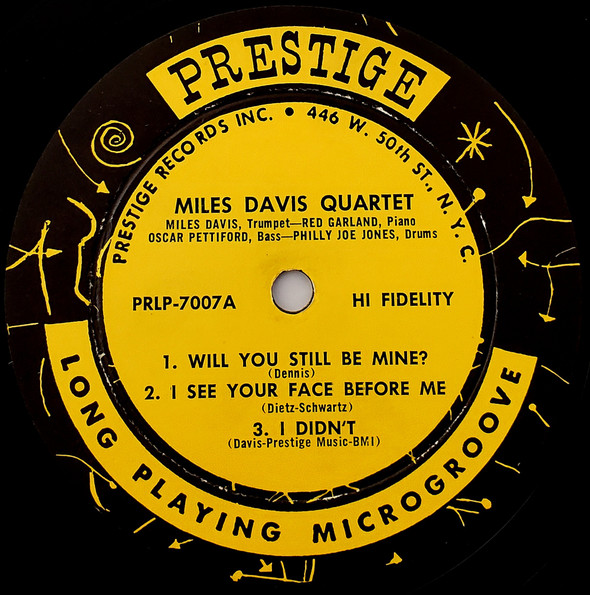
"The Musings Of Miles" is the last of four sessions Davis recorded as the sole horn player in a quartet, and the only one without Percy Heath. Several other songs from these sessions, like I Didn't, are improvisations over the changes of classic bebop songs, with no written head, "improvised contrafacts". Miles Ahead is another such quartet improvisation. The June 7, 1955, session was the only studio recording where Oscar Pettiford and Red Garland played together; in 1958 they were both on an all-star "Jazz From Carnegie Hall" tour in Europe which featured J. J. Johnson, Lee Konitz and many others.
The distinctive drapes behind Miles in the album cover photo shows him in the living room of Rudy's parents' Hackensack home, where these tracks were recorded.
- Recording: Don Sickler - Reflections
- Recorded on: March 27, 2000
- Label: HighNote (7062)
- Concert Key: F
- Style: Swing (uptempo)
- Trumpet - Don Sickler
- Alto Sax - Bobby Porcelli
- Piano - Ronnie Mathews
- Bass - Peter Washington
- Drums - Ben Riley
This quintet arrangement adds an intro and coda to Miles' first chorus from the original recording. The intro adapts Miles' first phrase into a rhythmic two-measure riff over a Latin groove. The coda is essentially the same, starting in the seventh measure of the C section; the fifth and sixth measures of this section are different from the in head, featuring the same figure as the beginning of the second A section. The last phrase of the coda (a pickup to the last 2 measures) is vamped 3 times before a final chord.
The horns are in harmony for most of the head, primarily thirds. In the second A section, the alto sax plays short phrases in the second and fourth measures that "respond" to the trumpet melody figures. The intro and coda also have a call-and-response structure, with the alto playing the first measure, and both horns in harmony on the second; this is repeated for the third and fourth, and fifth and sixth measures.
The 1st part lead sheets shown here are the same as the lead sheets under "The Musings Of Miles" cover.
The horns are in harmony for most of the head, primarily thirds. In the second A section, the alto sax plays short phrases in the second and fourth measures that "respond" to the trumpet melody figures. The intro and coda also have a call-and-response structure, with the alto playing the first measure, and both horns in harmony on the second; this is repeated for the third and fourth, and fifth and sixth measures.
The 1st part lead sheets shown here are the same as the lead sheets under "The Musings Of Miles" cover.
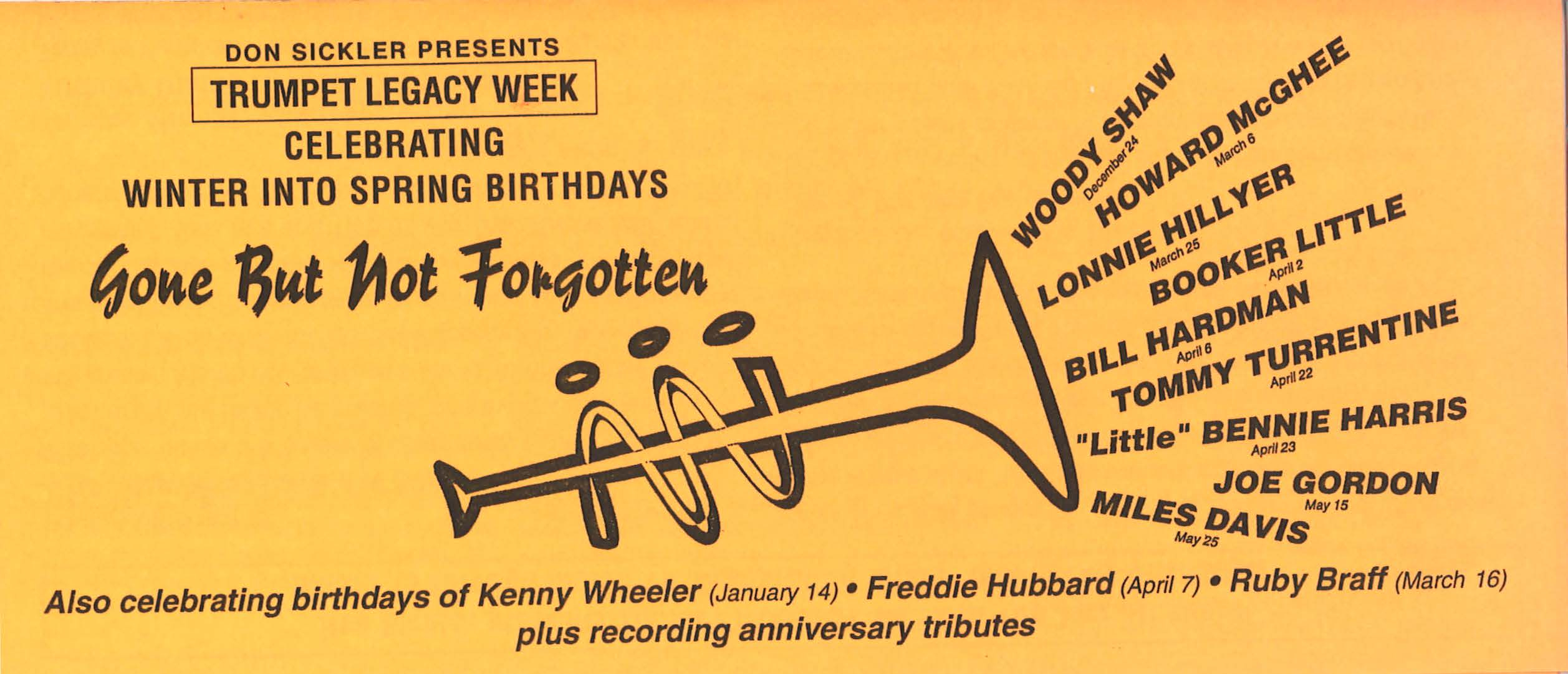
Don Sickler's quintet arrangement was written for a week-long tribute to trumpet players at the Jazz Standard club in NYC. Don kept the same front line and rhythm section for all days but included special guests. As noted for other Miles Davis titles, the musicians went to Rudy Van Gelder's studio the following week to record the album "Reflections."
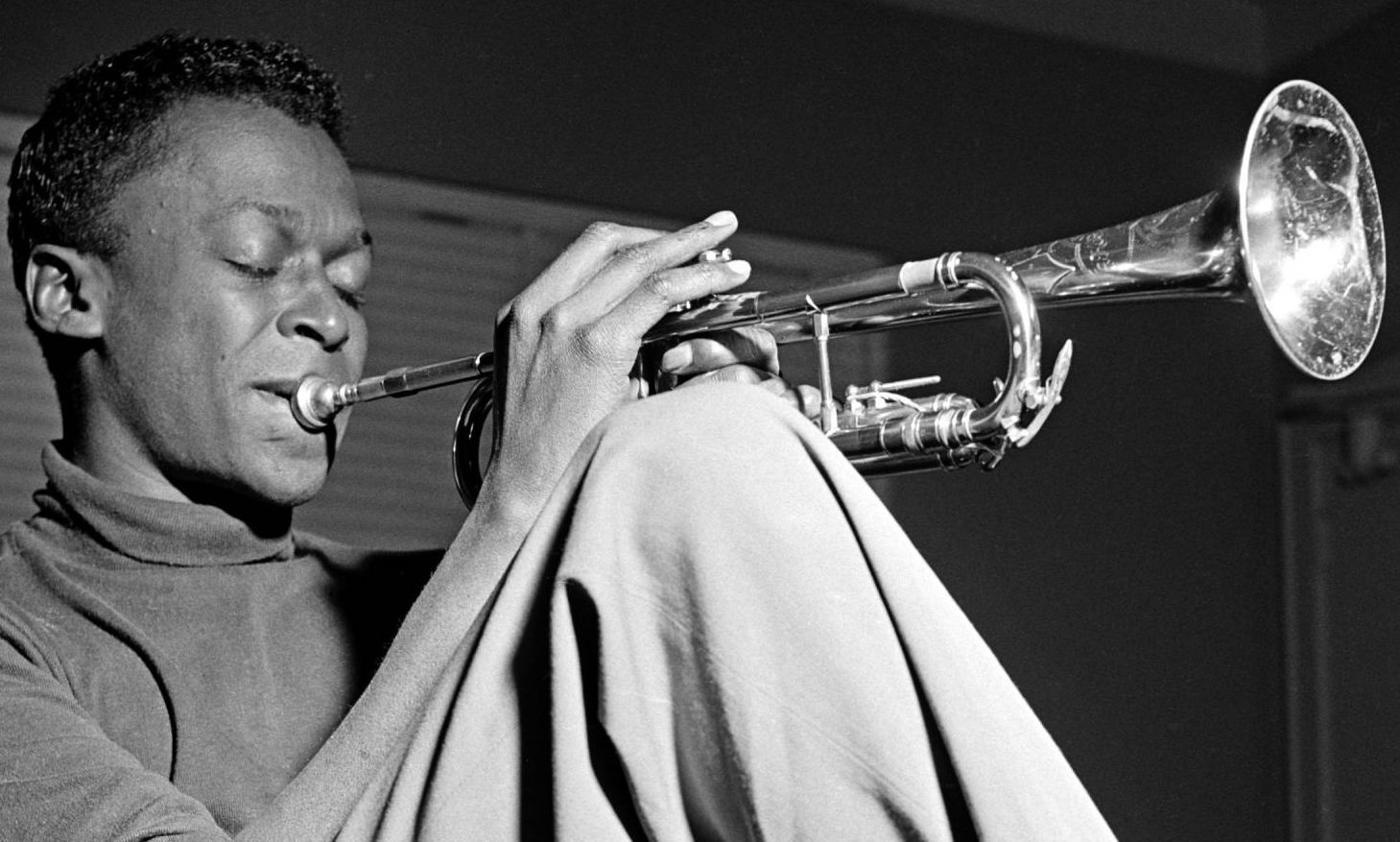
Miles Davis
May 26, 1926 – September 28, 1991
Miles Davis was without question among the most influential musicians in all of jazz history. As both soloist and bandleader, he defined the vanguard of jazz throughout his career and set the standard for nearly every major new development in the music for over forty years. His trumpet, open or with a Harmon mute, is one of the most instantly recognizable jazz sounds; his eloquent, economical style was quite unlike any trumpeter before him. Read more...