
Reconciliation – Rodgers Grant
An exquisitely detailed song whose melody keeps unfolding throughout the form, with no repeats. Like Morning Star it was originally recorded by flute virtuoso Hubert Laws. Rodgers Grant's solo piano arrangement is also available with an exclusive recording by Kenny Drew, Jr. Don Sickler's Minus You version pairs a trumpet melody with a lush 5-brass horn background throughout (no piano) and presents Bobby Porcelli's incredible alto sax solo.
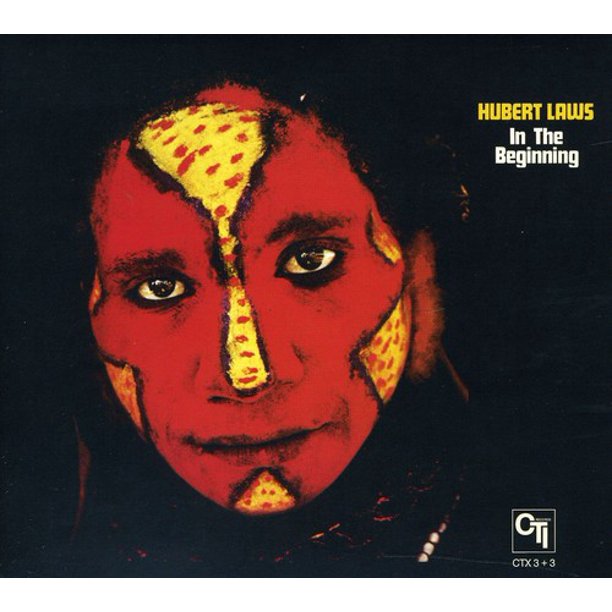

- Recording: Hubert Laws - In The Beginning
- Recorded on: February 6 - 11, 1974
- Label: CTI (CTX 3+3)
- Concert Key: A-flat
- Style: Swing (medium)
- Flute - Hubert Laws
- Electric Piano - Bob James
- Bass - Ron Carter
- Drums - Steve Gadd
Though the key is A♭ major, the melody rarely suggests this key except toward the end. There are several colorful side-slips and modulations in the changes. Both the B and D sections have an E♭ pedal point starting in the fifth measure; C begins with a pedal on C before visiting E♭ and E major.
There is a slow intro, mostly solo piano until the final chord, that is not included in our audio clip. It features a mostly ascending single-note line of quarter notes which actually appears in the form of the song as well. Stretched out to half notes at the faster tempo of the head, on the recording this line is hidden in the piano voicings on the A section, and the first half also in the B section; at D this first half appears again as a single-note piano countermelody. The line also appears as a flute background on A of the last piano solo chorus.
The melody on our lead sheet is based on Rodgers Grant's original manuscript. Hubert Laws plays a few melody phrases slightly differently on the recording. The C lead sheet is written in the octave where he plays it; this lower register is rather difficult on flute, and most flutists will want to play the melody an octave higher.
Some other songs on "In The Beginning" add a string section, like many other CTI albums of this time. This section includes David Nadien on violin, who played on a lot of CTI sessions and was in fact the most recorded violinist at Van Gelder Studio where these were done. David's cousin James Paul Nadien is an rising star drummer on both the New York and New England jazz scenes; he recently recorded his first session at Van Gelder's on an upcoming release by our music editor, saxophonist Elijah Shiffer.
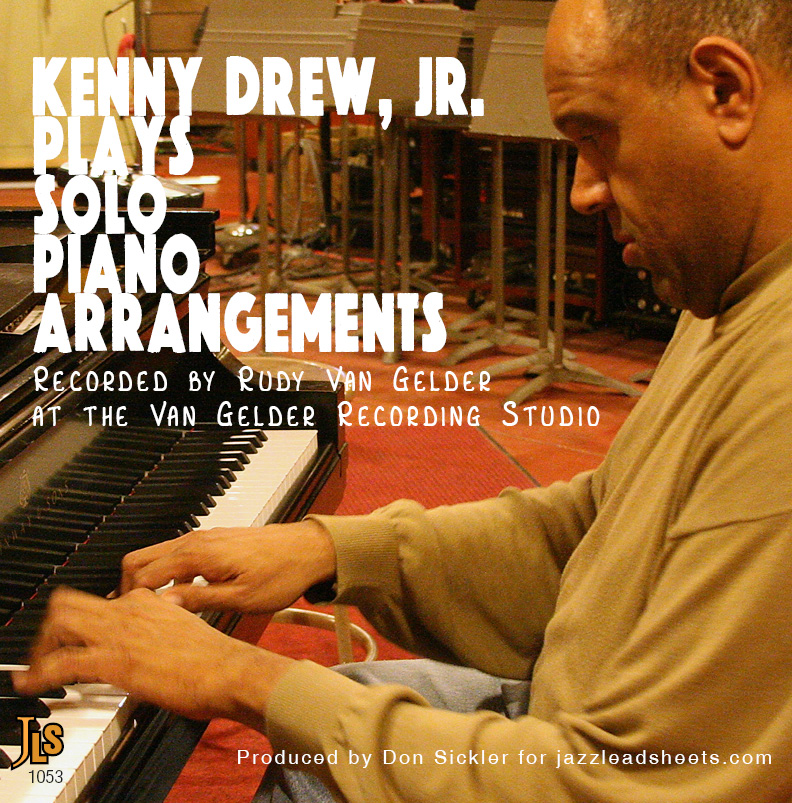
- Recording: Kenny Drew, Jr. - Kenny Drew, Jr. Plays Solo Piano Arrangements
- Recorded on: July 10, 2010
- Label: jazzleadsheets.com (JLS 1053)
- Concert Key: A-flat
- Style: Swing (medium)
- Piano - Kenny Drew, Jr.
Video
- Pianist Kenny Drew, Jr., playing Rodgers Grant's solo piano arrangement of RECONCILIATION at the Van Gelder Recording Studio, July 10, 2010.
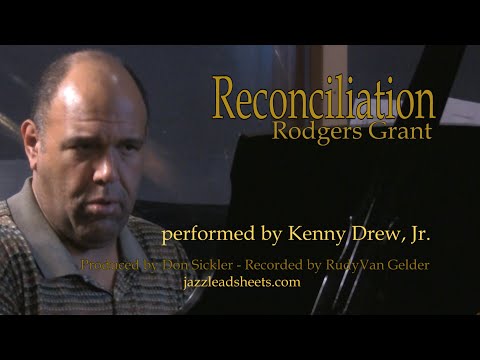

Pianist Kenny Drew, Jr., recorded solo arrangements of two Rodgers Grant songs, Reconciliation and Morning Star - the latter coming soon to jazzleadsheets.com; we already have the arrangement available. These were done at The Van Gelder Recording Studio, the same place that these songs were originally recorded by Hubert Laws in the 1970s.
The ascending line from the intro of the lead sheet is hidden in the voicings of this arrangement, with a few embellishments and alterations, in the same places where it appears on the original recording. The countermelody in the last ten measures is also a version of this line.
- Recording: Don Sickler - Reconciliation
- Recorded on: June 17, 2017
- Label: jazzleadsheets.com (JLS 1068)
- Concert Key: B-flat
- Style: Swing (medium slow)
- Trumpet and 3 Flugelhorns - Don Sickler
- Alto Sax (soloist) - Bobby Porcelli
- Trombone and Bass Trombone - Michael Dease
- Bass - Tim Givens
- Drums - Jeff Brillinger
I have always loved this composition. The harmonies are rich and complex under the beautiful flowing melody. I had an idea I wanted to try: a rhythm section of just bass and drums, no piano. Then I wanted to write a brass accompaniment for the melody and the solo section (it turned out to be three flugelhorns, trombone and bass trombone). I knew, to complete this track the way I wanted to, I'd have to do it over several overdub sessions.
Arrangement Overview with audio clips:
1st session: vocalist (melody), on piano composer Rodgers Grant, with bass and drums -- only the bass and drums tracks are going to be kept for the final recording
2nd session: alto sax (Bobby Porcelli) overdubs a solo on the intro and one full solo chorus after the melody
-- piano (Rodgers Grant) plays his footballs voicings (see Piano Voicings footballs edition) while Bobby overdubs his sections
CLIP audio excerpt: first 12 meas of Bobby's solo
3rd session: Don records three flugelhorn background tracks
4th session: trombone and bass trombone tracks are recorded
-- audio excerpt with 5 brass: intro and melody excerpt minus melody and soloist CLIP
-- accompaniment for solo excerpt CLIP This becomes our Minus You solo accompaniment track.
5th session: Don, on trumpet, overdubs the in and out melody track
-- excerpt of final master take: intro and melody CLIP and Bobby Porcelli's solo CLIP
I wanted to write a brass background for the Reconciliation melody. The first thing I did was discuss my project with Rodgers. I asked him if he would write out footballs for Reconciliation in the key of B-flat.
I knew, to complete this track the way I wanted to, I'd have to do it over several overdub sessions. I needed to first lay down a track that I could use as the foundation. On that first session, we recorded the entire track with Rodgers playing a piano accompaniment (with bass and drums) for the melody chorus, then just playing his footballs alone for a solo chorus, then back to his melody accompaniment for the melody out chorus. I told the bass & drums that Bobby Porcelli (alto sax) was going to play a solo on a later session and that the final recording would be without piano, just brass accompaniment with their bass and drum tracks.
My soloist, Bobby Porcelli, was not at this first session. Six days later I had a session with just Bobby and Rodgers, where they played several other Rodgers Grant titles together as a duo, including Miedo.
I asked Bobby to first overdub the introduction, which I had already come up with, but with Rogers playing the harmonies on the hits along with the bass and drums. Then Bobby was to take a complete solo chorus with Rodgers just playing his footballs.
Rodgers and Bobby had been friends and had been playing together for years; they were from the same neighborhood, they played together in Mongo Santamaria's band and other groups. Bobby knew exactly what I wanted. In the Van Gelder Recording Studio, Rodgers was in the piano booth, and Bobby was in Rudy's main room. While listening to the already-recorded bass & drum track, Bobby first recorded the intro, then we skipped ahead and Bobby played an incredible solo, accompanied by Rodgers playing his footballs essentially as written along with the already recorded bass and drums. I went home that night with a copy of the whole track with all the piano removed so I could come up with the brass accompaniment. With Rodgers' football sheet and pencil in hand I started to work.
The third session was me laying down the three flugelhorn tracks. The fourth session we added the trombone and bass trombone.
When writing the arrangement, I used Rodgers' harmonic movement to create the horn backgrounds and my counter melodies.
My intention was always to make a Minus You recording. Therefore the lead sheets available here show most of the horn movement in cue size, for the melody and the solo section: you can see what is going on behind you so you can understand how the melody fits with the background you're hearing.
For the solo section, there's a chord analyzation of the footballs (chord symbols) and I've indicated the horn counter lines (again, cue size) so you'll understand where the brass accompaniment plays. It's a different kind of background: since there's no piano, the horns give you all the harmonic and rhythmic information you need for your solo. The accompaniment is crafted around Bobby's solo, but I feel it will work for anyone else (and you) as well. I was careful not to overshadow the soloist with my backgrounds.
The instrumental lead sheet editions, plus the MP3 files, give you an opportunity to play the melody in and out and take a solo chorus. If you play it with your own quartet, obviously the pianist/guitarist would play off the C treble clef lead sheet, comping any way they want.
I originally wrote this arrangement for vocalist Denise Donatelli, whose key was a step higher than the key Hubert Laws played it in.
Minus melody form:
-- solo on the intro
-- play the melody
-- solo 1 chorus (with brass backgrounds, cued in the melody part)
-- play the out melody
Don Sickler's lush brass background to the introduction CLIP provides a perfect way to introduce yourself, then you play the melody. When it comes time for you to solo, the horns give you great supporting harmony. Our audio clip starts 8 bars before the solo section at D and continues for 16 bars CLIP.
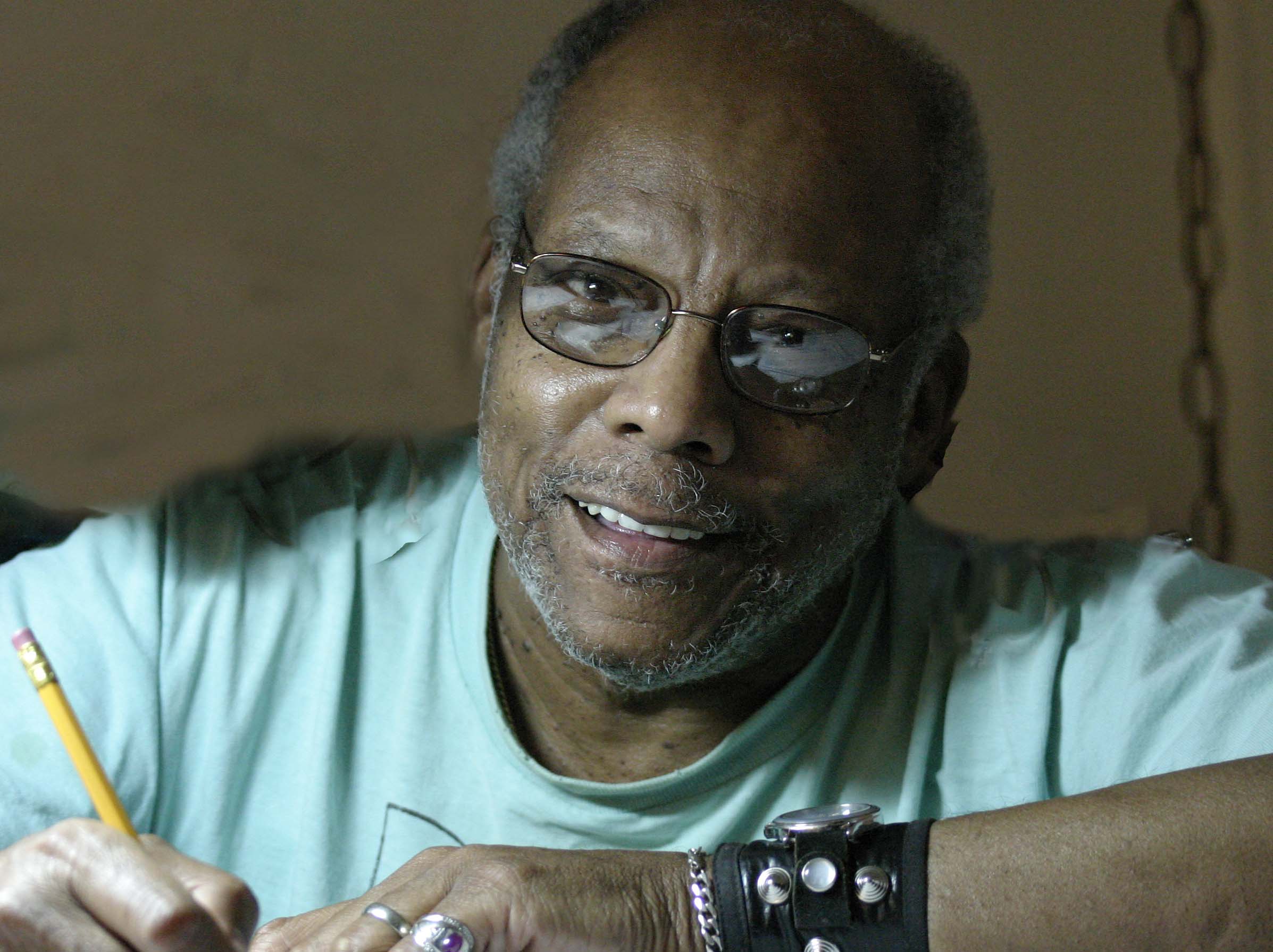
Rodgers Grant
January 18, 1936 – April 12, 2012
Rodgers Grant was an American jazz pianist, composer, and lyricist. After having worked with saxophonist Hugo Dickens in the 1950s, he became pianist for Mongo Santamaría in the 1960s. In 1963, Grant wrote the hit, Yeh! Yeh! in collaboration with Pat Patrick. Jazz vocalist Jon Hendricks added original lyrics and recorded the song with Lambert and Bavan at the Newport Jazz Festival of 1963. It became an international hit as recorded by Georgie Fame and the Blue Flames in 1965. Read more...